
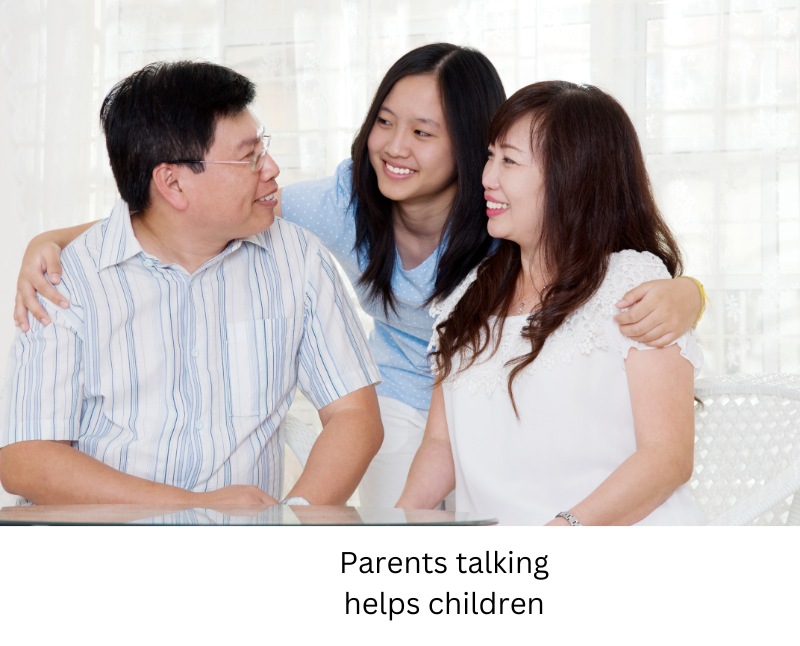
Couples use mediation to create agreements in divorce. Agreements on caring for children, creating healthy co-parenting plans, and financially supporting children. Yet, those same couples often wonder how mediation will work if they disagree on major points. Three tips help couples effectively come to agreements on children in divorce.
Be aware of the broken trust.
Couples say they are divorcing for a variety of reasons, but the root cause of nearly every divorce is broken trust. One or both spouses come to believe that the other no longer has their back, doesn’t keep their word, or can’t be depended on. This broken trust destroys marriage.
Broken trust also destroys communication. Healthy couples develop a shorthand. One says, “I’m worried about Thanksgiving dinner,” and the other understands that it’s more than seating or menus. The worry encompasses children’s behavior, navigating political differences, and making dairy, nut, and gluten-free options.
Once trust breaks down, so does this communication shorthand. Instead of shared meaning for words, each person now often attributes the worst interpretation to the other’s every word.
Understanding this dynamic helps you be aware of the difficulty in communicating. You may realize why you are misunderstood. And, you can begin to broaden your own interpretations of the other’s words.
Lead with actions—not words.
Many come into mediation making promises, then wonder why the other doesn’t simply accept their word. As John Maxwell states, “Your actions speak so loudly, I can’t hear your words.”
Words not matching action created the mistrust. So, making actions match words is the only fix. When trust has been broken, parents get to common ground when each leads with action rather than words. One example—if one parent hasn’t been as engaged with the children as the other but desires more parenting time, the other may believe that parent won’t show up. The mere promise to be more engaged means nothing. Actions matter.
Not big actions. . .small ones. Anyone can pull off grandiose gestures occasionally. Spending one great weekend with the kids won’t convince the other parent the commitment to true parenting is real. However, small but consistent behavior does persuade.
Behavior like consistently showing up on time. Consistently helping with homework. Consistently following agreed parameters for children’s behavior—especially, those parameters key to the other parent. These tiny, everyday, behaviors rebuild the broken trust—and restore communication.
Use concrete language.
While rebuilding trust requires action, creating agreement does require words. To help you both get on the same page, use very specific, concrete language.
Take the time to choose words carefully. Words that state exactly what you mean. Words that exclude alternative interpretations.
If you are still sharing a house, Dad might say, “I’ll take care of the kids tonight.” This general wording is ripe for misunderstanding. More concrete words would be, “I’ll pick the children up from school, fix dinner, and get them to bed by 8:00.” The specificity makes clear exactly what Dad intends—opening opportunity to fix misunderstandings before they occur.
On hearing the list, Mom knows to ask, “What about helping Jenny finish her costume for the school play?” With the general statement of “take care of the kids,” Mom might assume the costume is included. Now, instead of assuming that Dad knows about the costume, Mom knows to ask (since it isn’t on the list)..
With the first, Dad doesn’t even know a costume is needed. When the costume isn’t done, mom feels betrayed by him “yet again” breaking his word. He feels defeated that, even when he does exactly what he was thinking, it still isn’t good enough. With specifics—no wrong assumptions. No blow-ups over a “broken promise.” No ill feelings. Instead, coparents build communication that works.
Couples come to mediation because they need agreement on how to care for their children. These three keys help you reach agreement. . .and move into a healthy future.
If you would like more information on navigating all the decisions divorce requires, contact Resolution Mediation by clicking HERE or calling 317-793-0825. We look forward to serving you.
As always, the above is for information only. Seek a professional for guidance in your personal situation. This is an advertisemet